history
The History of the Louis Vuitton Alma: Origins and Design
By The Luxury Verdict Editorial Team · November 1, 2026

The Louis Vuitton Alma is more than a recognizable silhouette; it is a chronicle of the house’s travel-rooted engineering, and, in fashion lore, is linked to a partnership with Coco Chanel, with a design that has been reshaped across a century. By the end of this article you will know how the original 1901 Steamer bag gave rise to the 1934 public Squire, why the name “Alma” appeared only in 1992, what Art Deco elements define its dome, and how details such as feet, a clochette and removable straps evolved to accommodate every size from Nano to GM.
Key takeaways
- The Steamer bag, created in 1901, introduced a trapezoidal, compartmentalised form for transatlantic travelers [Sotheby’s].
- A 1925 request from Gabrielle Chanel for a dome-shaped bag is recorded as fashion lore that turned the Steamer into the smaller Squire [Sotheby’s].
- The Squire entered the market in 1934 as Louis Vuitton’s second handbag after the Speedy, featuring an Art Deco-inspired structured base [Sotheby’s].
- The “Alma” name, linked to Paris’s Place de l’Alma, was adopted in 1992 when the shape returned in the iconic Monogram canvas [Sotheby’s].
- Over time the bag gained a more curved dome, feet on the base, a clochette and removable leather straps, while expanding to five contemporary sizes, Nano, BB, PM, MM, and GM [Fashionphile].
Origins: The Steamer bag (1901)
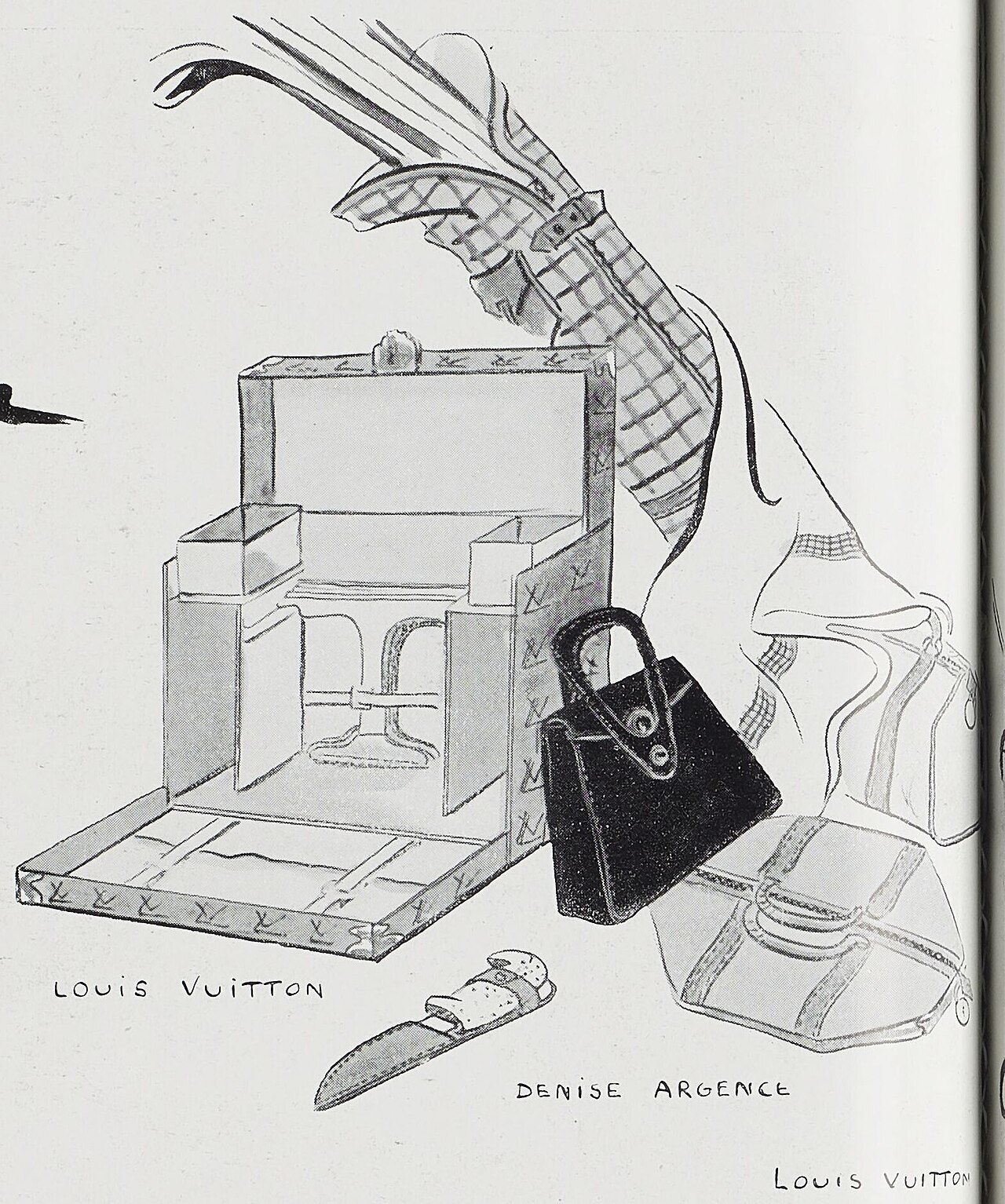
Louis Vuitton developed the Steamer bag in 1901 as a companion for transatlantic passengers. Its elegant trapezoidal silhouette housed hidden compartments that separated clean linen from worn garments, embodying the brand’s early focus on functional luxury [Sotheby’s]. The Steamer’s clean lines and trapezoidal shape provided the structural DNA that later appeared in the 1934 Alma, which featured a structured shape and sturdy base [Sotheby’s].


From Steamer to Squire: Chanel’s 1925 request and the 1934 public release
Fashion lore, as recorded by Sotheby’s, tells that in 1925 Coco Chanel asked Louis Vuitton for a dome-shaped everyday bag, prompting the house to reinterpret the travel-oriented Steamer into a more compact, day-to-day model called the Squire [Sotheby’s]. While the story is framed as legend, a second Sotheby’s article notes that a custom version was made for Gabrielle Chanel in 1925 and that she later gave permission for the style to be produced for the public [Sotheby’s].
In 1934 Gabrielle Chanel formally agreed to let the Squire, designed by Gaston-Louis Vuitton, be released to the wider market [Sotheby’s]. This launch positioned the Squire as Louis Vuitton’s second handbag after the Speedy and introduced an Art Deco-inspired structured shape with a sturdy base [Sotheby’s].
Naming and the 1992 Alma revival
The bag’s name did not become “Alma” until 1992, when Louis Vuitton revived the classic silhouette in its signature Monogram canvas [Sotheby’s]. According to Sotheby’s (and Fashionphile), the Alma name dates to 1992 and refers to the Place de l’Alma in Paris.


Art Deco DNA: The dome and structured base
The Squire/Alma’s dome is frequently described as an Art Deco hallmark. Its geometric curvature and clean lines reflect Art Deco influences, and the bag features a sturdy base; the original 1934 version had a smooth base with no feet [Sotheby’s][Fashionphile]. This Art Deco influence has persisted through every subsequent iteration, reinforcing the Alma’s status as a timeless design statement.

Evolution of details: Feet, clochette, straps and size spectrum
Feet and clochette
Fashionphile notes that the first Alma model had a slightly longer shape and a smooth base with no feet [Fashionphile]. Later versions introduced feet on the base, raising the bag slightly off the ground and giving the dome a more pronounced, elevated profile. Newer models also include a clochette.
Removable strap
The Alma BB, launched in 2010, was the first size sold with a removable leather strap, expanding wearability beyond the classic top-handle [Sotheby’s]. Newer BB and Nano versions also come with straps for shoulder wear, reflecting a broader trend toward versatile styling.
Size proliferation
The Alma has appeared in sizes ranging from BB up to XXL per Sotheby’s, and Fashionphile lists five contemporary sizes, Nano, BB, PM, MM, and GM [Sotheby’s]; [Fashionphile]. This size diversity has allowed the Alma to adapt to shifting consumer lifestyles without losing its architectural integrity.
Answering the common questions
Who designed the Alma, and did Coco Chanel really commission it?
The Squire, the direct predecessor of the Alma, was designed by Gaston-Louis Vuitton and released publicly in 1934 [Sotheby’s]. According to fashion lore, Chanel requested a dome-shaped bag in 1925, which led to the creation of the Squire, but the story remains a legend rather than a documented contract [Sotheby’s]. A separate Sotheby’s article notes a custom 1925 version made for Chanel.
Why is it called the Alma?
According to Sotheby’s, the name “Alma” was adopted in 1992 and references the Place de l’Alma in Paris.
What was the Alma called before 1992?
Before the 1992 revival, the silhouette was known as the Squire. It first appeared publicly under that name in 1934 and was adapted in 1955 into a slimmer, city-minded model called the Champs-Elysees; although that model was eventually discontinued, the Squire shape lived on and later became known as the Alma [Sotheby’s].
What is the Steamer bag and how is the Alma related to it?
The Steamer bag, launched in 1901, was a trapezoidal travel bag with hidden compartments for separating clean and worn items [Sotheby’s]. Its structural logic, clean lines, and compartmentalisation served as the architectural foundation for the later Squire/Alma, which translated the travel-oriented form into a refined, everyday top-handle bag.
What makes the Alma an Art Deco design?
The Alma’s dome, geometric proportions, and structured base embody the Art Deco aesthetic of the 1920s and 1930s, emphasizing streamlined elegance and architectural clarity [Sotheby’s]. The use of feet on the base and a clochette further reinforce the period’s penchant for decorative yet functional detailing.
How did the Alma’s feet, strap and sizes change over time?
- Feet: The original 1934 Squire featured a smooth base; later models added feet on the base to elevate the dome.
- Strap: The Alma BB (2010) introduced a removable leather strap (23.5 cm × 17.5 cm); newer BB and Nano versions also come with straps for shoulder wear [Sotheby’s].
- Sizes: The Alma has appeared in sizes ranging from BB up to XXL per Sotheby’s, and Fashionphile lists five contemporary sizes, Nano, BB, PM, MM, and GM.
Closing thoughts
The Alma’s journey, from the functional Steamer of 1901, through the fashion-lore-styled Chanel commission of 1925, to the public Squire of 1934, and finally to the 1992 Alma revival, illustrates how a single architectural concept can be reinterpreted across generations. Its Art Deco roots, evolving hardware, and expanding size range have allowed the bag to remain relevant while staying true to the original principles of structure, elegance, and practicality that defined Louis Vuitton’s early travel accessories.


